Choose a stronger or calmer visual experience. The content stays the same.
Henk & Linda Kruger · Our story
Why we care about marriages
Our marriage nearly ended, not because the problems we faced were particularly unusual, but because we didn’t know how to work through them.

Our marriage.
Our turning point.
Before Linda and I married, my first marriage had ended in divorce. It had been a seriously dysfunctional relationship, and I had desperately tried to save it. I searched for answers through books, teachings, counselling and therapy, but at the time I struggled to understand what was actually happening or how to deal with it. That experience, and what followed, left deep wounds that I had not yet learned how to deal with. Linda knew I was carrying hurt when we married, and she understood that healing might take time. We both hoped we could build something different together.
We already knew something about difficult journeys
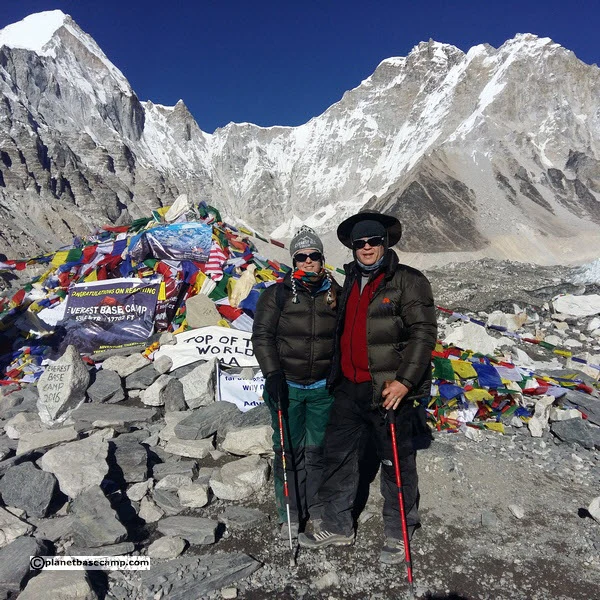
On our first wedding anniversary, we stood in the Himalayas looking towards Everest. Later, we would trek together to Everest Base Camp. At the time, those mountains represented some of the hardest terrain we had ever crossed together.
We did not yet know that some of the most difficult ground we would have to navigate would be inside our own marriage.
A mountain at least gives you something visible to overcome. You can usually see the terrain in front of you and understand why the next section is difficult. Relationship problems become much harder when neither person can clearly see what is happening – particularly when old hurt, triggers and assumptions are shaping what both people experience.
Like most couples, we had our share of disagreements and frustrations from the beginning. The problem was not necessarily what we were disagreeing about, but our inability to work through those difficulties in a healthy way. My unresolved trauma had a particularly strong influence on how I interpreted situations and responded when I felt hurt, challenged or misunderstood. Instead of resolving a problem, my reactions could turn it into something much bigger.
Looking back, we also recognise that Linda brought unresolved wounds into our marriage. Her own experiences influenced how she felt and responded to certain situations, although neither of us fully understood that at the time. We were two people carrying different kinds of hurt, reacting to one another in ways that often made matters worse, without the understanding or practical relationship skills to recognise and interrupt what was happening.
Had we been better equipped from the beginning, many of those early difficulties might never have escalated into the crisis that followed. Instead, the same patterns kept repeating, and with every disappointment, Linda’s hope diminished. Frustration became anger, and anger eventually hardened into resentment. She had tried for a long time, but by the time our marriage reached the brink of divorce, she no longer believed things were going to change.
I was afraid of losing another marriage. Linda was exhausted from trying to save one.
Where the turning point began
The turning point came when I finally met someone who could identify the underlying issues that needed to be addressed. With that help, I was able to deal with the hurt and trauma I had carried for years in a way I hadn’t been able to before.
That healing was not a magic fix for our marriage. It did not erase everything that had happened between us, and it certainly did not mean Linda suddenly trusted that things would now be different. What it did was enable me to become present in the marriage in a way that I had not been before. Instead of simply reacting to our problems through my own pain, I became able to look at what was happening between us more clearly, seek God for answers and take responsibility for the problems we were facing in our marriage and for doing what I could to help us find a different way forward.
But by then Linda had already given up.
She had spent too long hoping things would change and had been disappointed too many times. I could not simply announce that I was different now and expect her to believe me. She had heard promises before, and from her perspective there was little reason to think this time would be any different.
I had to win her over again.
I had to convince her that trying one more time would not simply mean repeating everything we had already tried. More importantly, I had to show her through the way I was living and responding that something had genuinely changed.
And then she began to see it.
There was an incident where something triggered her. In the past, the way she responded would almost certainly have triggered me in return. We both knew the pattern well enough that the rest of the conversation could almost have been predicted before it happened. Her reaction would provoke mine, mine would provoke hers, and within minutes we would find ourselves inside the same familiar cycle.
Except this time I responded differently.
Not slightly differently. Differently enough that Linda noticed.
The response she expected never came.
For her, it became one of those moments where you stop and think, “Wait a minute. This is not what normally happens.”
That moment was important because promises of change are easy to make when a marriage is in trouble. Hope begins to return when the person who has stopped believing you actually encounters something they cannot explain using the old pattern.
Another major shift came when I stopped responding primarily according to how I felt about what was happening. When you are hurt, frightened or defensive, your own interpretation of an event can feel completely obvious. You know what the other person meant. You know why they said it. You know what they are doing to you. Once you become convinced that your interpretation is correct, you begin responding to that interpretation as though it were an established fact.
I began learning to do something different.
Instead of immediately reacting to what I believed Linda meant, I started asking better questions. I tried to understand what she was actually experiencing, why she was responding the way she was and what the situation looked like from her side. That did not mean automatically agreeing with everything she believed or accepting every accusation as true. It meant becoming mature enough to understand before reacting.
Those were the kinds of changes Linda could actually experience rather than merely hear about. Slowly, they began giving her reason to believe that trying again might not simply lead us back to the same place.
As I began dealing with what was happening inside me, something unexpected also began happening with Linda.
She started recognising hurt she had carried for much longer than our marriage.
Some of the anger and resentment that had developed between us was understandable. But beneath that, there were also wounds and experiences from her own past that had never been fully dealt with. My willingness to confront what was happening inside me gave her the motivation to begin looking at what was happening inside her.
That did not mean her pain was my fault, any more than my past was hers to fix. It meant that once one of us began moving, the other began seeing possibilities that had previously been hidden by hopelessness.
We both had work to do.
We had to learn what was actually happening
As we worked through our marriage, we discovered that both of us needed substantial change. That did not mean our responsibilities or the hurt we had caused were identical. It meant neither of us could leave all the work to the other. We began learning a great deal about human behaviour – particularly about the things people carry into relationships without realising it.
We learned about triggers, and how something happening in the present can awaken a reaction shaped by something that happened years before. We learned how unresolved trauma can influence the way a person interprets tone, conflict, rejection, criticism or distance. We learned how two people can be arguing about something that appears relatively small while both are actually reacting to something much deeper.
We learned how easy it is to believe that the other person is the problem when your own pain is influencing what you see. At the same time, we also learned that not every accusation is accurate and not every problem belongs equally to both people. Sometimes growth means recognising what is happening inside you. Sometimes it means learning how to respond wisely to something difficult happening inside your spouse.
We also began to understand marriage as a shared responsibility to help one another heal and grow. When you are exhausted, it is understandable to feel that nothing can improve until your spouse changes, or to wonder whether leaving is the only way forward. We had both known that hopelessness. But we learned that there could be more for us to do than stand at a distance waiting for the other person to become easier to live with. We could listen, offer support, encourage one another and challenge each other wisely. Our faith helped us see that caring for our marriage included helping each other face what was difficult.
Neither of us could force the other to change or do the other person’s inner work. Helping did not mean excusing destructive behaviour, and it must never mean remaining in danger or tolerating abuse. Husbands and wives both have responsibilities, but those responsibilities are not always identical or equally weighted. What mattered was learning to recognise what each of us could do to make honest change possible.
And we learned that insight alone is not enough.
You can understand why something happens and still need the skill to respond differently when it happens again.
Slowly, our marriage changed.
Not because we stopped having challenges, but because we were no longer as helpless when challenges arrived. We became better at recognising where a reaction was coming from, what belonged to the present and what belonged to old hurt, where responsibility actually lay, and what each of us could do differently.
The marriage we once believed might end became a place of healing for both of us.
Then other couples started crossing our path
We did not initially set out to become marriage coaches.
God simply began bringing people across our path who were struggling in their own relationships.
We would listen to a couple describe a problem that felt enormous to them and realise that we could often see something they could not see from inside it. Patterns that felt hopeless to the people living through them were sometimes surprisingly clear to us because we had spent years learning to recognise similar dynamics in ourselves.
The hard-earned education of our own marriage had changed the way we looked at relationship problems.
Sometimes a problem that felt overwhelming to the couple was actually far more manageable once the underlying pattern became visible. One person might need to acknowledge something they had been resisting. Another might need to stop responding to a trigger in the same predictable way. Sometimes unresolved hurt was sitting underneath an argument that appeared to be about something completely different. Sometimes both people had spent years trying harder when what they actually needed was a different skill.
From outside the conflict, we could often see where the cycle could be interrupted.
And we discovered that we could help people see it too.
That eventually became part of the reason I wrote my book, How to Save Your Marriage, and why Marriage Rescue 911 began to take shape. We wanted to take what we had learned through failure, pain, restoration and years of trying to understand human relationships, and use it to help people who felt as stuck as we once did.
What each of us brings
Although we were in the same marriage, we were not experiencing it in the same way.
I know what it is like to carry unresolved pain into a marriage, to be unable to deal with problems well, and to reach the point where your reactions are being shaped by hurt you have not properly dealt with. I also know what it feels like to be stuck in a seriously dysfunctional marriage, desperately trying to save something without understanding the dynamics you’re dealing with. Looking back, I can now recognise patterns and behaviours that made very little sense to me at the time. Much of what I bring to coaching comes from learning to understand what sits beneath conflict, take responsibility for what belongs to me and interrupt destructive cycles. Those experiences shaped my book, How to Save Your Marriage, and the way I approach one-to-one marriage and relationship coaching today.
Linda brings a different perspective.
She knows what it is like to love somebody who still needs healing. She knows what it is like to keep hoping, become disappointed, lose hope, grow angry and eventually reach the point where you no longer want to try again. She also knows what it is like to see genuine change in the person you had stopped believing would change, and then recognise unresolved wounds of her own. She had to look honestly at how those wounds shaped her thinking and responses, and confront what needed to change in herself too.
That gives her an understanding of the spouse who has had enough.
Together, those perspectives allow us to look at a troubled marriage from more than one side. We are not interested in simply deciding which spouse is “the problem”. We want to understand what is actually happening, where responsibility lies, what each person is carrying, what patterns are repeating and what would need to change for something different to become possible.
Marriage was only part of the picture
Then children added another layer.
Having a strong marriage without children and having a strong marriage while raising children are not quite the same challenge. Parenting introduces pressures, responsibilities, expectations and relationships that you simply do not encounter before becoming a parent.
Once again, we discovered that willingness and love were not always enough.
There were things we simply did not know.
We could care deeply about our children and still encounter situations where we did not have the skills or understanding to respond as wisely as we wanted to. Parent-child relationships have their own triggers, patterns, frustrations and opportunities for healing.
Evergreen Parenting came across our path at a time when we needed it ourselves.
We benefited from it so much that it felt like a natural extension of what we were already learning and doing. Linda went on to become a registered Evergreen Parenting facilitator because we wanted to be able to help families not only with the relationship between husband and wife, but also with the relationships developing between parents and their children.
For us, marriage and family relationships are not separate worlds. They constantly affect one another. A struggling marriage affects a family. Parenting pressure affects a marriage. Unresolved pain in a parent can affect the way that parent responds to a child. A healthier marriage can create a healthier environment in which children grow, while healthier parenting can remove pressures that continually spill back into the marriage.
That is why Marriage Rescue 911 is ultimately about more than preventing divorce.
Why we do this
We know what it is like to reach the point where you no longer know what else to try. We know what it feels like when one person still wants to fight and the other has had enough. We know how difficult it is to see clearly when you are standing inside the problem, and we know that some problems that feel impossibly large begin to look very different once somebody helps you understand what is actually happening.
We do not believe that every relationship problem has a simple answer, and we cannot promise an outcome that ultimately depends on the choices of two people. What we can do is help people look more clearly at what is happening in themselves and in the relationships around them. We can help identify patterns that are difficult to see from inside the conflict, help people recognise where responsibility actually lies, and help them develop skills for dealing with problems that they may simply never have been taught how to handle.
Our Christian faith is at the centre of that work. We believe marriage is God’s idea, and we believe God is able to heal, restore and teach us in places where we have run out of answers of our own. At the same time, we have learned that prayer, healing, wisdom and practical relationship skills belong together.
Marriage Rescue 911 grew out of a marriage that very nearly became another divorce.
Today, that same marriage is one of the reasons we believe there can still be hope when two people can no longer see the way forward.